NEW PUBLICATION: Study report on How Social Entrepreneurship Ecosystems Incorporate a Gender Lens

Social entrepreneurship has been under scrutiny for several years now. According to the Global Entrepreneurship Monitor, there is less of a gender gap in social entrepreneurship : “of the world’s social entrepreneurs, an estimated 55% are male and 45% are female – a gender gap that is less pronounced than in commercial entrepreneurship”. 
Nevertheless, many reports have highlighted the need for a better integration of women and gender minorities in the social economy, especially as social entrepreneurs. 

This initial study of the Coop4Equality project, co-developed by DLI, collected data about gender mainstreaming in the European social entrepreneurship ecosystem to better understand stakeholders’ practices regarding gender equality and inclusivity and aims to answer the following questions:

  • How do the social entrepreneurship ecosystems mainstream gender-lens?
  • Is the social entrepreneurship ecosystem adapted to women entrepreneurs? 
  • Does it take their needs into account?
  • Is there a good understanding of gender equality within this ecosystem? 

Read the full report here

DLI Lands UNESCO STEM and Gender Project

2 women using VR headsets to build a machine

On 5 July, UNESCO announced the first five recipients of its program on Revitalizing STEM Education to Equip Next Generations with STEM* Competency (*Science, Technology, Engineering and Mathematics). Among awardees, the Brussels-based Digital Leadership Institute, a pioneer in promoting digital equity for girls and women, was tapped to lead a joint Romanian and Belgian project on “Gender and STEM Education in Romania” (GenSTEMed) with the International School Hermann Oberth and Association for Women in Engineering, Science and Technology.

The Revitalizing STEM Education Program is part of a Series of STEM Education Actions led by UNESCO

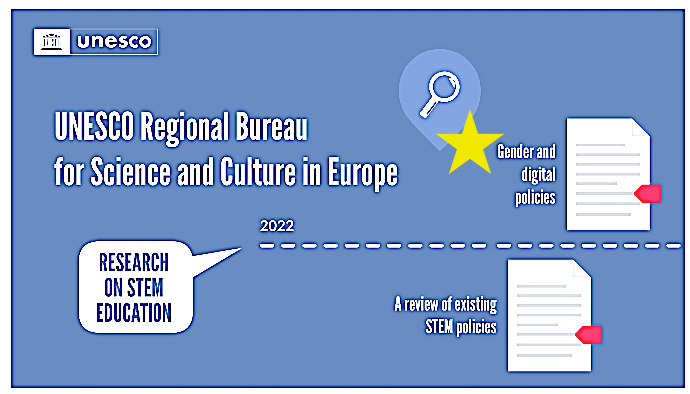
The Revitalizing STEM program builds on groundbreaking work in this field led by UNESCO’s Regional Bureau for Science and Culture in Europe, including support for a regional STEM Alliance, a diverse group of stakeholders in STEM and Education from across Southeast Europe and the Mediterranean. For the past three years, Cheryl Miller, DLI Director, has contributed to the STEM Alliance and authored a report for UNESCO on Digital and Gender Policies in Southeast Europe which also helped inform the present action (see YouTube video here).

Cheryl Miller, DLI Director, authored “Gender and Digital Policies” Report for the UNESCO Regional Bureau for Science and Culture in Europe

The GenSTEMed project aims to increase knowledge of factors influencing the decisions girls and women make about STEM studies and careers, an area in which Romania enjoys global leadership. The project’s Research Activities begin with stakeholder surveys and interviews starting in September 2024, outcomes of which will be shared at a hybrid event in Bucharest in February 2025. The event will also host practitioner discussions, inspiring role model talks, and Educational Activities, latter including hands-on emerging technology workshops targeting students and practitioners and aiming to showcase practices that increase participation of girls and women in STEM.

STEM Alliance
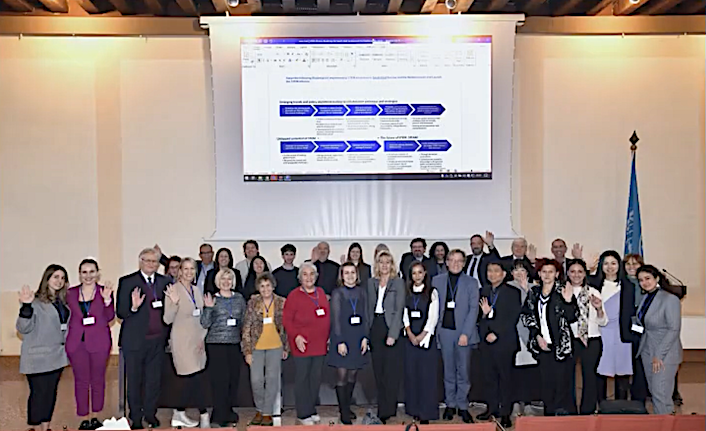
STEM Alliance Conference, April 2023

To learn more about the Gender and STEM Education in Romania project, please follow the UNESCO program website or contact us.

SAVE THE DATE: Awareness raising on sexually related online risks

In an era where digital interactions play a significant role in our lives, it’s crucial to be informed and understand potential online threats. Join us 15th December for a 2h engaging and informative online workshop on sexting, sextortion and non consensual intimate image abuse, where we will elaborate on the nature of these trends, identify their consequences on the victims and propose measures to deal with them.

What you will get out of this workshop:

  • Become aware of different online threat types
  • Understand how a harassments case is set in order to recognise its signs early on
  • Learn the coping mechanises and responding strategies

The workshop is organised in the framework of the Erasmus + OnSafe project which focuses at equipping young people and teenagers with the necessary knowledge, skills and tools to prevent being exposed to sexually related online risks and threats, through the development, piloting and implementation of a series of interactive workshops.

First Women STEM UP Newsletter

The Women STEM UP project, which started in November 2022, aims at tackling a key challenge related to the persistent gender gap in STEM higher education i.e., Science, Technology, Engineering and Mathematics; and consequently, in the labour market. STEM graduates are in high demand in the labour market and STEM jobs are among the most highly paid. The project has just published its first newsletter portraying the work done so far.

Check out the the project’s work done to understand students’ and teachers’ experiences regarding gender in STEM and the development of the first training prototype!

Thank you to the We4Change partners and community!

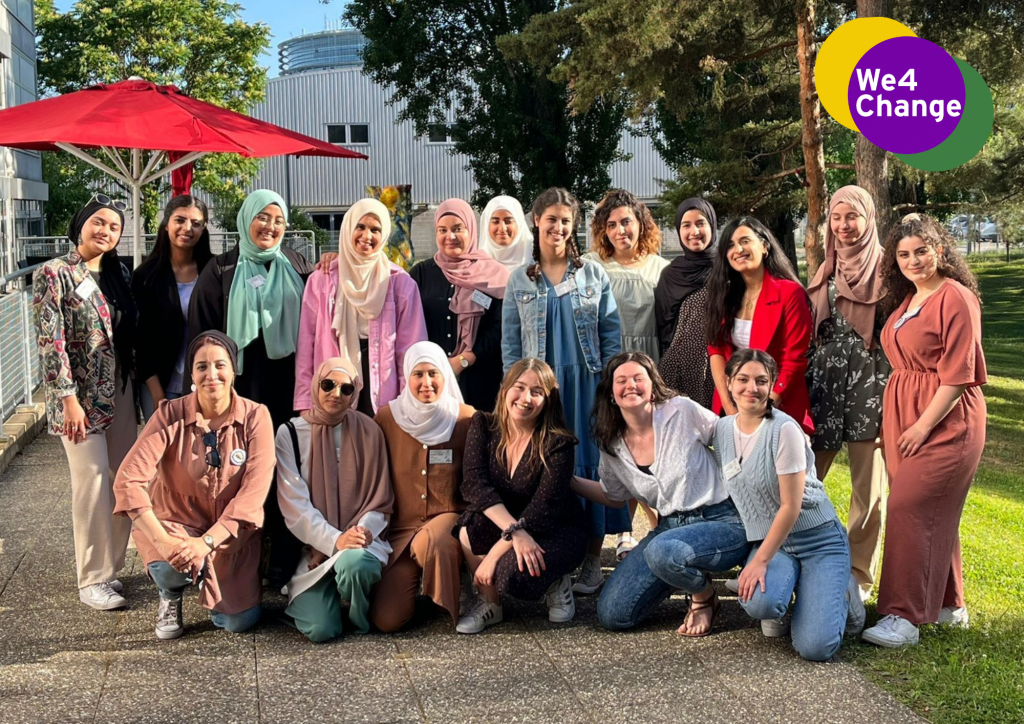
Copyright: Empow’Her France
28th of February 2023 marked the official closure of the project “We4Change: Girls and Women Connecting for Environmental Change” aimed at engaging, connecting and empowering young girls and women with digital and innovation skills, increase civic engagement and unlock their changemaking potential to engage in society and have an active role in addressing the challenges posed by climate change. Over the past two years, partners Digital Leadership Institute (BE), Stimmuli for Social Change (GR), Empow’Her (FR), TEKEDU (MD) and ZERO (PT) have worked together to achieve this mission and had the following results:
  • The We4Change Changemakers Event Curriculum: a series of educational materials to serve as examples of workshops that can be organized during a We4Change Changemakers Event to develop the skills promoted by the project: digital, social innovation, entrepreneurship, leadership and environmental awareness skills. It includes the specific methodology to prepare each workshop, but also other elements that can be used when organizing a Changemakers Event, such as working with mentors and coaches, and information on the practicalities of organizing the events. The curriculum can be downloaded for free in five languages: English, French, Greek, Portuguese and Romanian.
  • Handbook for Trainers and Youth Workers on Running a Successful We4Change Changemakers Event: complementing the curriculum, this handbook aims to support trainers and youth workers – including those that may have never applied before gender mainstreaming tools – to organize effectively a We4Change Changemakers Event, to drive active citizenship and empower girls and young women with digital and environmental awareness skills to become the future changemakers of their community. It introduces the guiding principles of the We4Change concept, values and philosophy, describes the competences that trainers and youth workers, as well as participants will apply for the different activities, and includes all practical information needed to organize a successful We4Change Changemakers Event. The handbook can be downloaded for free in five languages: English, French, Greek, Portuguese and Romanian.
  • Partners organized a We4Change “Train the Trainers” workshop in March 2022 training over 30 youth workers to apply the We4Change principles and methodology to run a successful Changemakers Event in their communities.
  • Partners organized a total of 14 We4Change Changemakers Events in their countries, with more than 100 girls and young women participating, to inspire them to ideate and design collectively solutions to problems encountered in their environments with the support of other stakeholders from the local communities.
  • Each partner organized a dissemination event to share about the results of the project and discuss how other stakeholders can use them to achieve the project’s objective.
All the results can be found and downloaded for free on the project website: https://we4change.eu/. Thank you to the partners, stakeholders, girls and young women for participating to the project activities during the past two years, and supporting us to be changemakers for a sustainable future! Thank you also to the Erasmus+ Programme of the European Union for the support to make this international collaboration possible!